

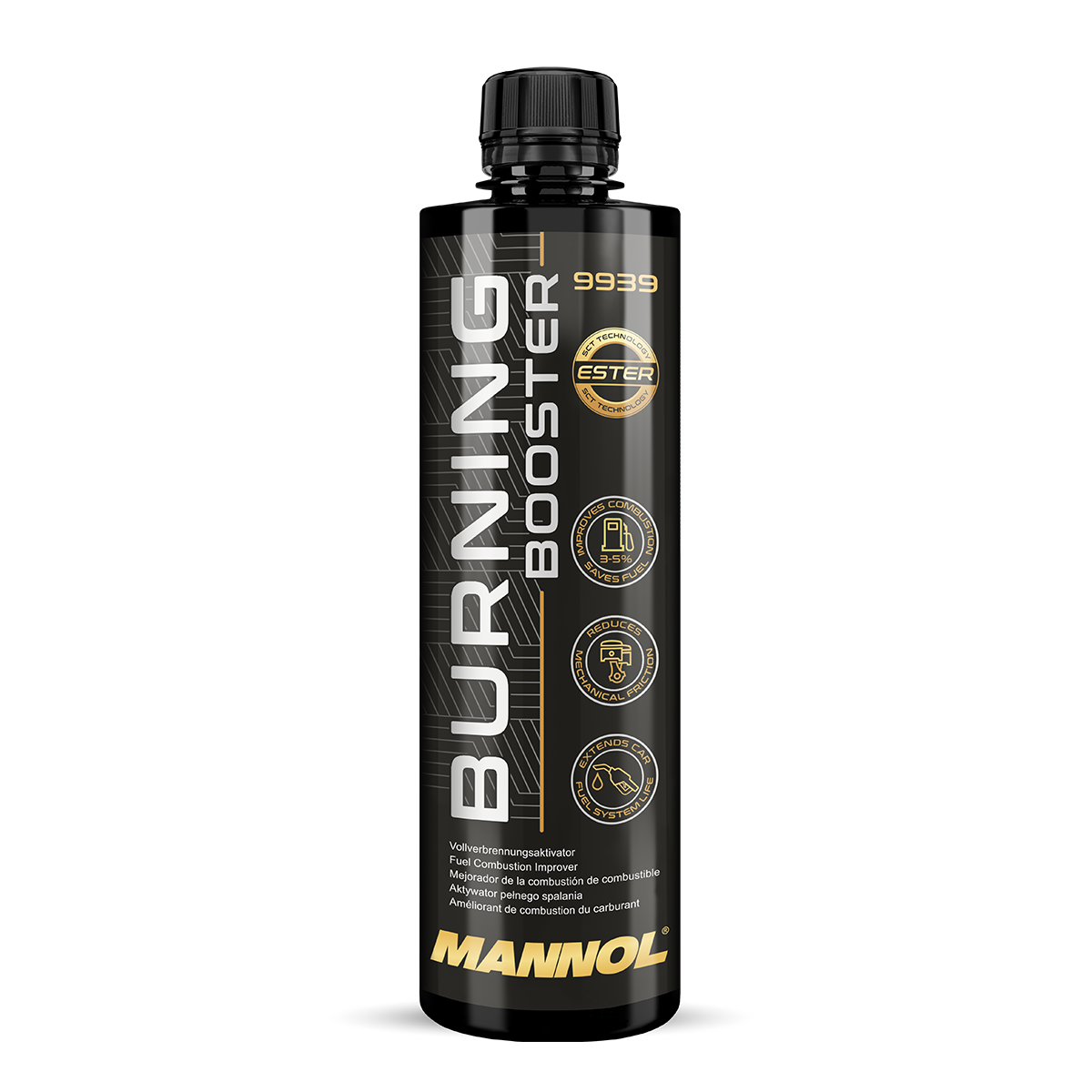
MANNOL Burning Booster 450 ML
$ 6.00
In Stock
-
 Quality productssourcing the best products out there
 -
 exquisite servicewe believe in strong customer service
 -
 Vast NetworkConnecting the dots
 -
 Data analysisMarket driven approach for better service
- It has excellent cleaning properties, which keeps the fuel system clean and especially the injectors;
- Reducing carbon formation, smoke and toxicity increases the life of spark plugs, oxygen sensors, catalysts, injectors and the engine as a whole;
- Forms a stable oil film on the parts of the fuel system, which prevents their corrosion;
- The strong and stable oil film formed when using Burning Booster significantly reduces the wear of all rubbing pairs of the fuel system, thereby increasing its service life, and also reduces the wear of cylinders, pistons and piston rings;
- Compatible with all construction materials.
- Reducing carbon formation, smoke and toxicity increases the life of spark plugs, oxygen sensors, catalysts, injectors and the engine as a whole;
- Forms a stable oil film on the parts of the fuel system, which prevents their corrosion;
- The strong and stable oil film formed when using Burning Booster significantly reduces the wear of all rubbing pairs of the fuel system, thereby increasing its service life, and also reduces the wear of cylinders, pistons and piston rings;
- Compatible with all construction materials.
Fuel combustion Activator for all types of gasoline engine fuel systems based on synthetic esters. Designed to reduce fuel consumption and protect the engine from the consequences of using low-quality (surrogate) gasoline. When mixed with gasoline, it weakens intermolecular bonds, orders the spatial structure of hydrocarbons and makes it more uniform, which makes it easier for oxygen molecules to access them, which increases the completeness of combustion (oxidation) of gasoline and reduces its consumption